

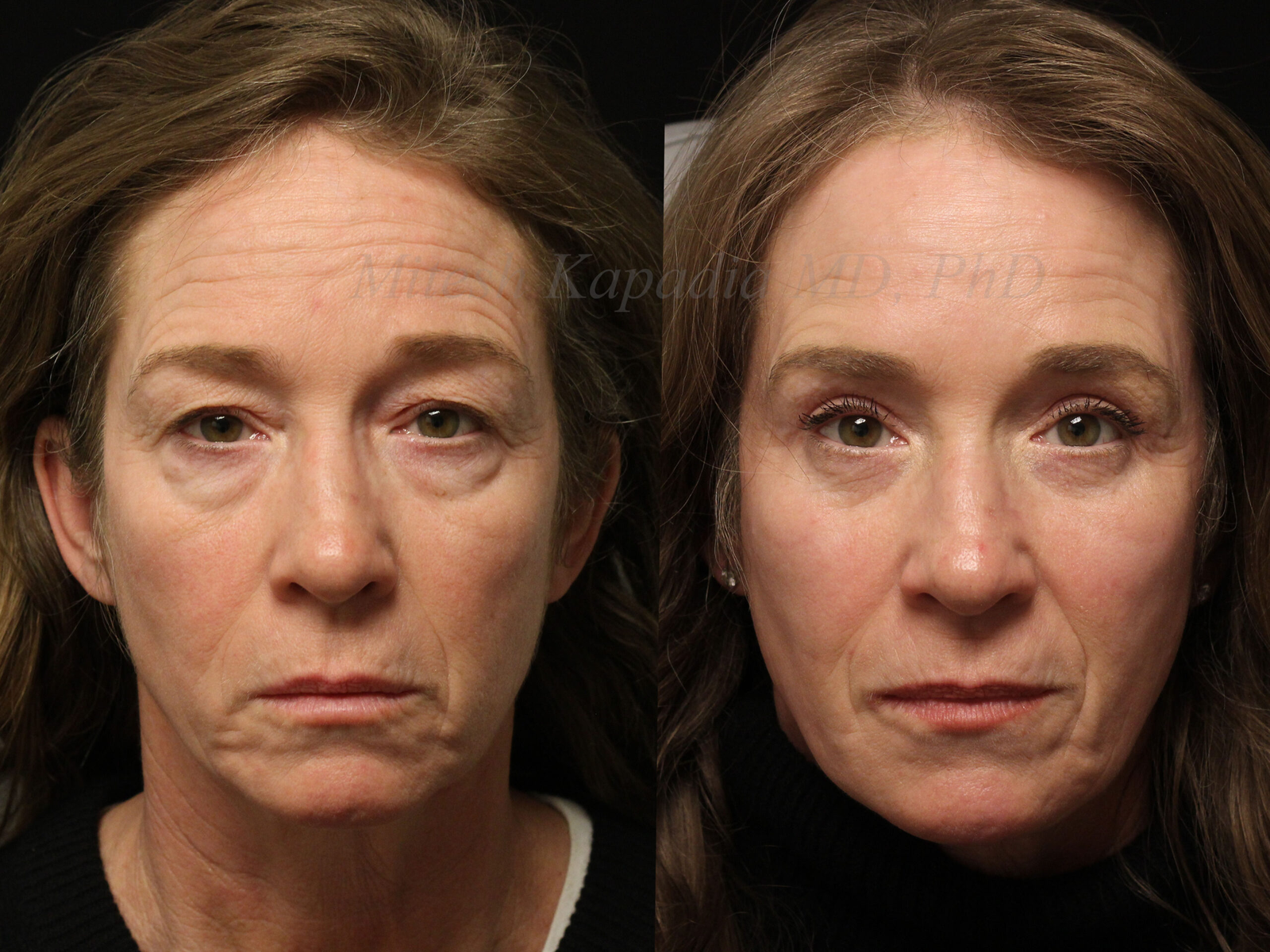
When people search for “before after bleph,” they are usually looking for a realistic idea of how the eyes can change after blepharoplasty. Before-and-after photos can be useful, but they can also create unrealistic expectations if you do not know what you are looking at. The healing process is gradual, and the final result is rarely visible immediately after surgery.
Blepharoplasty, commonly called eyelid surgery, is designed to improve the appearance of the upper eyelids, lower eyelids, or both. Depending on the individual, the procedure may address excess skin, selected fat, or changes in the eyelid tissues that contribute to a tired or heavy appearance. It can be performed for cosmetic reasons and, in some cases, to improve vision when excess upper-eyelid skin interferes with the visual field.
Understanding the difference between the before stage, the early recovery period, and the eventual after result makes it much easier to evaluate blepharoplasty realistically. Rather than focusing on dramatic transformations, it is better to look for balanced changes that suit the person’s facial structure.
What Does “Before After Bleph” Actually Mean?
The phrase “before after bleph” is a shortened way of referring to before-and-after images of blepharoplasty. These photographs typically show a patient’s appearance before surgery alongside photographs taken at a later stage of recovery. The purpose is to demonstrate how eyelid surgery can change the contour and appearance of the eyes.
A good before-and-after comparison should be relatively consistent. Ideally, the photographs are taken with similar lighting, camera distance, facial expression, head position, and makeup conditions. Otherwise, it can be difficult to determine how much of the visible difference comes from surgery and how much comes from photography.
It is also important to remember that every patient’s starting point is different. Someone with significant upper-eyelid skin excess may experience a more noticeable change than someone who has only mild hooding. Similarly, lower blepharoplasty results vary considerably depending on whether the main concern is under-eye bags, skin laxity, fat distribution, or a combination of factors.
What the Eyes May Look Like Before Blepharoplasty
Before blepharoplasty, patients may notice several features around the eyes that make them look older, tired, or heavier than they feel. Upper eyelids may have excess skin that folds over the natural crease, while lower eyelids can develop puffiness or loose skin beneath the eyes.
Some people naturally have hooded eyelids because of their anatomy rather than aging. Others gradually develop heavier eyelids as skin elasticity changes. Genetics, facial structure, and the natural aging process can all influence the appearance of the eyelids.
Before surgery, a qualified surgeon generally evaluates the eyelids as part of the entire face rather than treating them as an isolated feature. Factors such as eyebrow position, forehead movement, cheek structure, skin quality, and eye shape can all affect the final appearance. This broader assessment is important because removing too much tissue can create an unnatural or overly hollow appearance.
What Happens During Blepharoplasty?
Blepharoplasty is tailored to the patient’s anatomy and goals. Upper blepharoplasty commonly involves an incision placed within the natural upper-eyelid crease, allowing the resulting scar to become less noticeable as it heals. Through this approach, the surgeon can address carefully selected excess skin and, when appropriate, underlying tissue.
Lower blepharoplasty can be performed using different techniques. In some patients, an incision may be made just beneath the lower eyelashes, while in others, an approach through the inside of the lower eyelid may be appropriate. The technique depends on factors such as skin excess, fat pockets, muscle anatomy, and the surgeon’s assessment.
Modern eyelid surgery is generally focused on preservation and balance rather than simply removing as much tissue as possible. A skilled surgeon considers how the eyelids function and how changes will interact with the surrounding facial structures. The goal is typically to create a refreshed appearance while maintaining a natural-looking eye shape.
Before After Bleph: The First Few Days
One of the biggest mistakes people make when looking at before-and-after blepharoplasty photos is assuming that the first postoperative appearance represents the final result. It does not. During the first several days, swelling and bruising are common and can make the eyes look quite different from how they will eventually appear.
Patients may experience tightness around the eyelids, temporary discoloration, puffiness, and sensitivity. The amount of swelling varies from person to person. Factors such as the surgical technique, individual healing response, activity level, and postoperative care can influence the early recovery period.
Because of this, photographs taken immediately after surgery should not be compared directly with mature results. Early images are useful for documenting recovery, but they are not a reliable representation of the final cosmetic outcome. Patience is an important part of the process.
How Blepharoplasty Results Change During Healing
As healing progresses, swelling usually decreases and the eyelids begin to settle into a more natural position. The eyes may gradually look less puffy, and the incision lines can become less noticeable over time. This stage is where before-and-after comparisons become more informative.
Healing does not happen at exactly the same speed for everyone. One eye may appear to settle slightly faster than the other, and temporary asymmetry can occur during recovery. Small differences in swelling between the two sides are not necessarily a sign that something has gone wrong.
Over the following weeks and months, the tissues continue to mature. Scars can soften and fade, while residual swelling gradually improves. For this reason, surgeons often recommend waiting until the appropriate stage of healing before judging the final aesthetic result.
What a Natural Bleph After Result Should Look Like
A successful blepharoplasty result does not necessarily mean that someone looks dramatically different. In many cases, the most successful results are subtle. The eyes may look more open, rested, and defined without appearing as though the person has obviously had surgery.
For upper blepharoplasty, a natural result may involve a cleaner eyelid crease and less excess skin while preserving an appropriate amount of eyelid tissue. The objective is not necessarily to create a large visible eyelid area. Facial proportions and the patient’s natural anatomy remain important.
For lower blepharoplasty, the improvement may appear as a smoother transition between the lower eyelid and cheek. Depending on the patient’s anatomy, reducing or repositioning prominent fat can soften the appearance of under-eye bags. However, not every person needs fat removal, and aggressive treatment can sometimes produce an excessively hollow appearance.
Comparing Before and After Bleph Photos Correctly
When reviewing before-and-after bleph photos, start by examining the overall eye area rather than focusing on tiny differences. Look at the eyelid crease, amount of visible skin, under-eye contour, and relationship between the eyelids and eyebrows.
Next, check whether the photographs are genuinely comparable. Similar lighting and facial expressions make a significant difference. A person looking directly into the camera in one photograph and slightly raising their eyebrows in another can create a misleading comparison.
It is also useful to consider the timing of the after photograph. An image taken several days after surgery shows recovery, whereas a photograph taken months later is more useful for evaluating the mature cosmetic result. Whenever possible, patients should ask surgeons about the timing and circumstances of photographs presented as examples.
Upper Blepharoplasty Before and After
Upper blepharoplasty is often chosen by people concerned about heavy or hooded upper eyelids. Before surgery, excess skin may extend over the natural eyelid crease and create a heavier appearance. In some cases, the excess tissue can also interfere with the upper portion of the visual field.
After healing, the upper eyelid may have a more defined crease and a lighter appearance. The amount of change depends on how much excess tissue was present initially and what surgical approach was used.
A particularly important point is that upper blepharoplasty is not simply about removing skin. The surgeon must determine how much tissue can be safely addressed while maintaining normal eyelid function and an aesthetically appropriate contour. Conservative treatment can often produce a more natural result than an aggressive approach.
Lower Blepharoplasty Before and After
Lower blepharoplasty is commonly associated with concerns such as under-eye bags, puffiness, loose skin, or an uneven transition between the lower eyelid and cheek. These concerns can arise from several different anatomical factors, which is why treatment varies from patient to patient.
After surgery and recovery, the lower eyelid area may appear smoother and less swollen. In suitable patients, repositioning rather than simply removing fat can help create a softer transition between the eyelid and cheek.
The final appearance depends heavily on the patient’s anatomy and skin quality. Lower eyelid surgery is a delicate procedure, and the goal should be improvement without creating an overly tight, hollow, or altered appearance.
How Long Does It Take to See the Final Bleph Result?
There is no single recovery timeline that applies to every patient. Many people notice significant improvement as the first several weeks pass, but subtle swelling can remain for longer. The tissues continue changing as healing progresses.
This is why before-and-after photographs should always be interpreted according to when the “after” image was taken. A photograph from the first week can look dramatically different from one taken several months later.
Your surgeon should provide personalized postoperative guidance based on the procedure performed and your individual healing. Follow-up appointments are particularly important because the surgeon can evaluate the incisions, eyelid position, swelling, and overall recovery.
Choosing a Surgeon for the Best Bleph Before and After Result
The quality of the surgeon matters enormously when considering eyelid surgery. Patients should look for an appropriately qualified surgeon with substantial experience performing blepharoplasty and a strong understanding of eyelid anatomy.
Reviewing a surgeon’s before-and-after portfolio can be helpful, but quantity is not everything. Look for cases that resemble your own concerns and pay attention to whether the results appear balanced and natural rather than excessively dramatic.
A consultation is also an opportunity to discuss what you actually want to change. Good surgical planning involves understanding your goals while also explaining what the procedure can realistically accomplish. A responsible surgeon should discuss limitations, potential risks, recovery, and alternatives rather than promising a perfect result.
Risks and Realistic Expectations
Like any surgical procedure, blepharoplasty has potential risks. These can include bleeding, infection, scarring, asymmetry, changes in sensation, dry or irritated eyes, difficulty closing the eyes, and other eyelid-related complications. The specific risks depend on the procedure and individual circumstances.
Cosmetic expectations also deserve careful attention. Eyelid surgery can improve certain structural features, but it cannot stop the normal aging process. It also cannot guarantee that a patient will look exactly like a particular celebrity or match a photograph found online.
The best mindset is to view blepharoplasty as an opportunity for targeted improvement rather than complete facial transformation. Realistic expectations and careful surgical planning generally provide a much better foundation for satisfaction.
Final Thoughts on Before After Bleph
Searching for “before after bleph” can be a useful first step when researching eyelid surgery, but photographs should be viewed as examples rather than promises. The most meaningful comparisons show consistent photography, appropriate healing time, and patients with similar anatomical concerns.
The before stage helps explain what is being addressed, while the after stage demonstrates how the tissues look once healing has progressed. Between those two points is a recovery period that may include swelling, bruising, temporary asymmetry, and gradual changes in the appearance of the eyelids.
Ultimately, a good blepharoplasty result is usually about proportion and subtle improvement. The eyes should remain expressive and functional while appearing refreshed and harmonious with the rest of the face. Anyone considering the procedure should discuss their individual anatomy, goals, expected recovery, and potential risks with a qualified medical professional rather than relying solely on online before-and-after images.
