

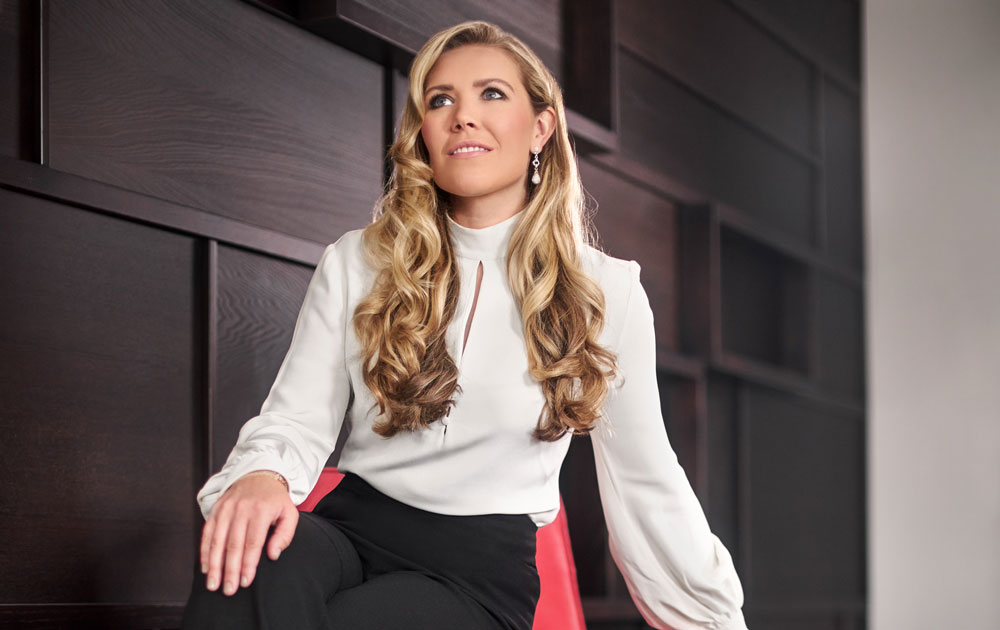
When people search for Fiona Barratt, they are often looking for more than the name of an interior designer. Fiona Barratt-Campbell has built a reputation around a distinctive approach to luxury interiors, combining architectural thinking, natural materials, sophisticated textures, and a strong sense of place. Her career has developed from formal design education and experience at an established studio into an independent creative business with an international portfolio.
What makes Fiona Barratt particularly interesting is the way her personal background connects with her professional style. Growing up in Northumberland, she was surrounded by dramatic landscapes, historic architecture, and the remains of Roman influence. Those early surroundings became an important source of inspiration, helping shape an aesthetic that feels contemporary without losing its connection to history and nature.
Her work also demonstrates that luxury design does not necessarily mean filling a room with expensive objects. Instead, Fiona Barratt focuses on proportion, atmosphere, craftsmanship, texture, and functionality. The result is an approach that can feel calm and polished while still having enough character to make a space memorable.
Who Is Fiona Barratt?
Fiona Barratt-Campbell is a British interior designer and entrepreneur known for high-end residential and commercial interiors. She established Fiona Barratt Interiors in 2006, developing the company into a design studio serving clients in the United Kingdom and internationally. Her work has become associated with refined spaces that combine architectural detail with carefully selected furnishings and materials.
Her education played an important role in establishing her design foundation. She studied at Chelsea College of Art in London and later attended Parsons School of Design in New York. Before creating her own company, she worked at Kelly Hoppen Interiors, where she progressed into a senior design leadership role. That experience gave her valuable exposure to professional project management, luxury interiors, and the demands of high-end clients.
Fiona Barratt’s career is also connected to the property world through her grandfather, Sir Lawrie Barratt, the founder of Barratt Homes. However, her professional identity has developed through her own design work and businesses. Her background gave her an early understanding of property and architecture, while her education and professional experience allowed her to develop an individual creative language.
The Beginning of Fiona Barratt Interiors
The launch of Fiona Barratt Interiors in 2006 was an important turning point in her career. Rather than simply creating a personal design label, Fiona envisioned a studio that could build close relationships with clients while bringing together designers, artisans, artists, and specialist makers. That collaborative philosophy remains central to the way her studio approaches projects.
One of the most notable early projects associated with Fiona Barratt Interiors was the refurbishment of a luxury ski chalet in Verbier, Switzerland, for entrepreneur Richard Branson. The project gave the young studio an opportunity to demonstrate its ability to handle an ambitious luxury property while creating an environment with its own identity.
Starting an independent studio at a relatively young age required more than creative confidence. Fiona had to develop a business capable of handling budgets, suppliers, construction details, client expectations, and complex timelines. Her progression shows why successful interior design is as much about organization and communication as it is about visual creativity.
What Makes Fiona Barratt’s Design Style Different?
A defining characteristic of Fiona Barratt’s work is her use of texture. Instead of relying heavily on elaborate patterns or excessive decoration, she creates visual interest through contrasting surfaces. Reclaimed wood, polished concrete, metals, leather, stone, textiles, and other tactile materials can work together to create depth without making a room feel crowded.
Her palette is frequently restrained, with neutral colors providing a calm foundation. However, neutral does not mean boring in Fiona Barratt’s interiors. Subtle variations in material, light, finish, and shape can create an atmosphere that feels layered and sophisticated. Accessories, artwork, antiques, and carefully chosen furniture can then introduce additional personality.
Another important element is balance. Fiona’s interiors are designed to look beautiful, but they are also intended to work for everyday life. Spatial planning is therefore a major part of the process. Her approach considers how people move through a property, how rooms connect, and how architectural features can be enhanced rather than hidden.
Inspiration From Northumberland and Roman History
Fiona Barratt’s childhood in Northumberland has had a lasting influence on her creative outlook. The area’s rugged landscape and historic character provided a natural education in texture, geology, architecture, and atmosphere. She has described the region as an important source of inspiration throughout her career.
Roman history is another recurring influence. Growing up near Hadrian’s Wall exposed her to ancient architecture and archaeology, creating a connection between contemporary design and historical forms. This helps explain why some of her interiors can feel modern while still possessing a sense of permanence.
Nature also appears in the way Fiona approaches materials. Stone, wood, metal, and organic textures can make an interior feel connected to its surroundings. Rather than treating a building as an isolated box, her philosophy considers the location and existing character of a property. This is one reason her interiors can feel tailored to their environments rather than copied from one project to another.
Fiona Barratt and Luxury Interior Design
Luxury is often misunderstood as simply being expensive, but Fiona Barratt’s work demonstrates a more nuanced interpretation. A luxury interior needs to feel considered from every angle. The quality of materials matters, but so do craftsmanship, comfort, lighting, proportions, and the relationship between individual elements.
This philosophy is particularly relevant to high-end residential design. A luxury home has to support real life while also meeting demanding aesthetic expectations. Kitchens need to function, bedrooms need to feel comfortable, and living spaces need to accommodate people rather than simply serve as photographs. Fiona’s emphasis on planning helps bridge the gap between visual impact and practical living.
Her studio has worked on both residential and commercial projects, giving the practice experience across different types of spaces. That variety can be valuable because each property presents different architectural challenges. A historic townhouse requires a different response from a contemporary apartment or an international hospitality project.
FBC London and the Move Into Furniture
Fiona Barratt’s creative work has extended beyond interior design into furniture. FBC London was established as an independent furniture brand, allowing her design philosophy to be expressed through individual pieces as well as complete interiors. The brand has presented furniture collections designed around material quality, sculptural forms, and tactile surfaces.
This expansion makes sense from a design perspective. When an interior designer creates a room, furniture is one of the most important components of the composition. Designing furniture personally gives Fiona greater control over proportions, materials, and visual relationships within a space.
The furniture side of the business also gives her ideas a broader audience. Instead of experiencing her design language only through a complete residential project, clients can encounter individual tables, seating, lighting, or decorative pieces as standalone objects. Her work therefore sits somewhere between interior architecture, product design, and contemporary craftsmanship.
Fiona Barratt’s Approach to Residential Projects
Residential design requires an unusually personal approach because every homeowner has different habits, tastes, and expectations. Fiona Barratt Interiors has emphasized collaboration with clients as an important part of its process. The objective is not simply to impose a recognizable style but to understand the people who will use the property.
A good example of this philosophy can be seen in Fiona’s own London residence, which she and her husband, former England footballer Sol Campbell, renovated. The property combined historic architectural elements with contemporary interventions, requiring careful planning to connect old and new. The project included extensive work on spatial layouts, materials, infrastructure, and modern technology.
This kind of project illustrates why interior design at the luxury level can be highly technical. Behind a polished photograph are decisions involving electrical systems, heating, plumbing, windows, acoustics, storage, lighting, and circulation. The visual result is only one part of the completed project.
Her Connection With Sol Campbell
Fiona Barratt is also publicly known as the wife of former England football captain Sol Campbell. The couple married in 2010, and Campbell has also been associated with Fiona Barratt Interiors as a director.
Their connection has inevitably attracted media attention, but Fiona’s career stands independently within the design industry. Her education, work at Kelly Hoppen Interiors, founding of her own studio, furniture business, and international design projects provide a substantial professional record beyond her personal relationship.
In fact, the combination of sport and design in their household makes for an interesting contrast. Campbell built his reputation in professional football, while Fiona developed hers through architecture, interiors, entrepreneurship, and creative direction. Their shared involvement in business also demonstrates how public-facing careers can develop in very different industries.
Why Fiona Barratt Remains Influential
The lasting appeal of Fiona Barratt’s work comes from its ability to balance contemporary luxury with a sense of authenticity. Trends in interior design change quickly, but materials such as stone, wood, metal, leather, and quality textiles have a durability that can survive changing fashions.
Her work also demonstrates the importance of understanding a building before decorating it. Location, architecture, history, natural light, and existing features can all influence the final result. This approach helps prevent interiors from feeling generic, which is especially important in luxury properties where individuality is a major part of the experience.
Fiona Barratt’s career is therefore useful to study even for people who are not professional designers. It shows how a strong creative identity can emerge from education, experience, observation, and a willingness to develop ideas across different disciplines. Her journey from design school to an international studio and furniture brand is a good example of how creative ambition can become a sustainable business.
The Future of Fiona Barratt’s Design Legacy
As the interior design industry continues to evolve, Fiona Barratt’s emphasis on craftsmanship and meaningful materials remains highly relevant. Modern clients increasingly want spaces that feel personal rather than mass-produced, and that creates opportunities for designers who understand how to combine individuality with practical planning.
Sustainability is another issue shaping luxury interiors. Responsible sourcing, long-lasting furniture, restoration, adaptive reuse, and thoughtful material selection are becoming increasingly important. A design philosophy centered on quality and longevity can naturally fit into this changing landscape because well-made pieces do not need to be replaced every few years simply because a trend has changed.
Ultimately, Fiona Barratt represents a particular kind of British design: understated but detailed, contemporary but historically aware, luxurious but practical. Her Northumberland roots, architectural influences, formal education, professional experience, and entrepreneurial approach have all contributed to a recognizable body of work.
Conclusion
Fiona Barratt has established herself as a significant name in contemporary British interior design through a career built on creativity, craftsmanship, and careful spatial planning. From her early education at Chelsea College of Art and Parsons School of Design to her experience at Kelly Hoppen Interiors and the creation of Fiona Barratt Interiors in 2006, her journey reflects a steady development of both creative and business expertise.
Her design language is especially recognizable for its sophisticated use of texture, restrained palettes, natural materials, architectural details, and carefully considered furniture. Her Northumberland upbringing and interest in Roman history provide a distinctive foundation, while her international projects have allowed those influences to evolve in different settings.
More than simply creating attractive rooms, Fiona Barratt has developed a design philosophy centered on how spaces feel, function, and connect with their surroundings. That combination of beauty and practicality is perhaps the strongest reason her work continues to attract attention. For anyone interested in luxury interiors, British design, or the business of creative entrepreneurship, Fiona Barratt’s career offers an engaging example of how a personal design vision can grow into an internationally recognized brand.
